



Why Aluminium Wiring is Transforming Automotive Design
Modern vehicles are no longer purely mechanical systems. Instead, they are highly integrated electrical platforms. From battery management systems and power distribution units to ADAS sensors, infotainment and interior control modules, the volume and complexity of wiring in today’s vehicles continues to increase rapidly. At the same time, the industry is under constant pressure to reduce vehicle weight, improve energy efficiency, lower production costs, and increase electrical system reliability.
This has led to a significant shift towards aluminium wiring in automotive design. Compared to copper, aluminium offers:
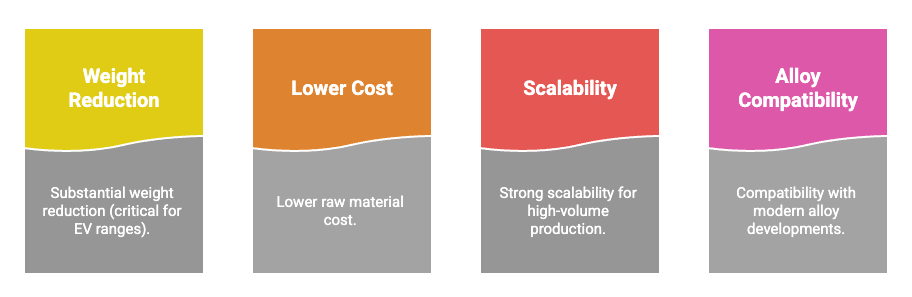

As a result, aluminium is becoming a serious contender in next-generation automotive electrical systems. But adopting aluminium is not simply a material substitution. It requires a fundamentally different approach to connection technology.
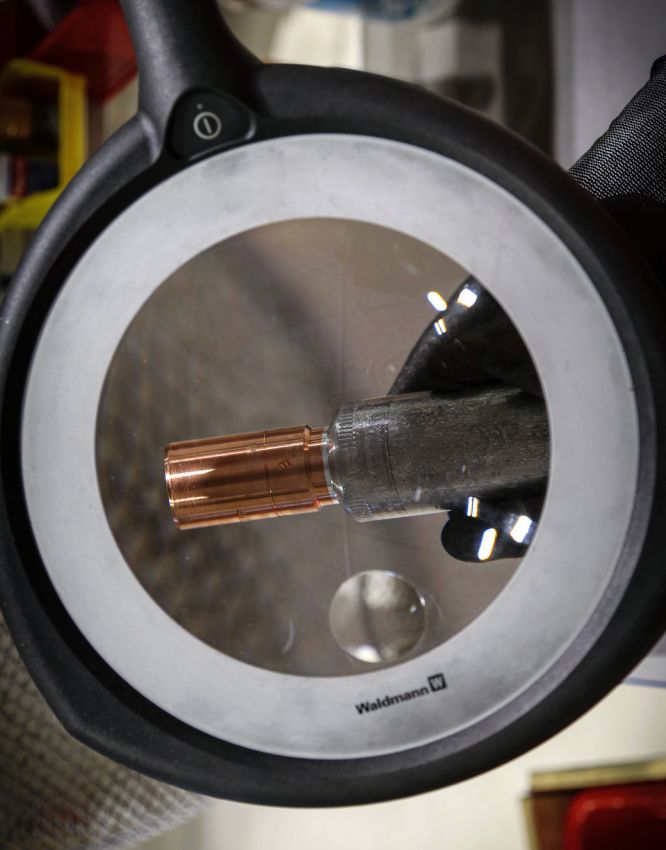

Despite its advantages, aluminium behaves very differently from copper in electrical applications. When used as a conductor, flexible aluminium conductors introduce a number of key challenges that directly affect termination performance in automotive electrical systems. One of the main issues is mechanical sensitivity. Aluminium strands are significantly softer and more delicate than copper, meaning that excessive force during termination can easily damage the conductor structure and compromise the quality of the joint.
Another critical factor is oxide layer formation. When aluminium is exposed to air, it naturally develops a thin oxide layer on its surface. Although this layer remains stable and protective, it also acts as an electrical insulator. Therefore, engineers must break or disrupt it during the connection process to ensure reliable conductivity.
In addition to these material-specific characteristics, aluminium connections must also withstand demanding environmental stress factors typical of automotive use. In real-world automotive applications, connections continuously face vibration, thermal cycling, moisture and humidity. Over time, these conditions gradually degrade connection integrity if engineers do not manage them properly at the point of termination. As a result, aluminium is a material that performs well both electrically and mechanically in its intended role. Nevertheless, it remains highly sensitive when it comes to achieving a consistent and reliable termination.
Why Aluminium Crimping Requires a New Approach
Traditional aluminium crimping methods were largely developed around copper-based systems. However, aluminium introduces a fundamental contradiction:
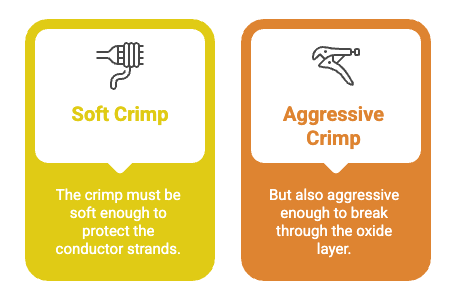

Too much force risks damaging the conductor. Yet, too little force results in poor electrical contact and unstable performance. This balancing act makes aluminium crimp quality one of the most critical factors in ensuring long-term reliability in automotive electrical systems. As vehicles become more electrified and safety-critical, inconsistency at this connection level is no longer acceptable. Ultimately, a more controlled, repeatable solution is required.
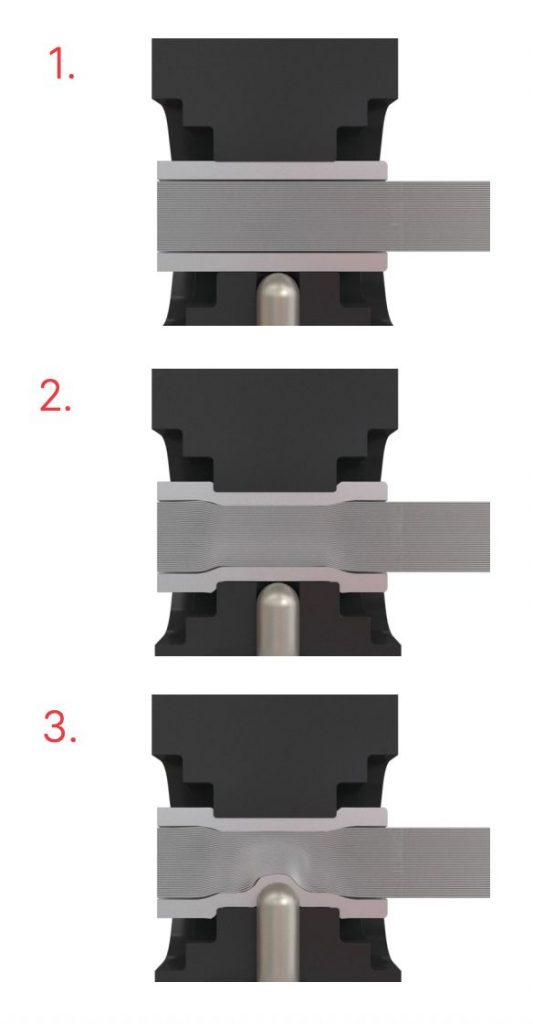

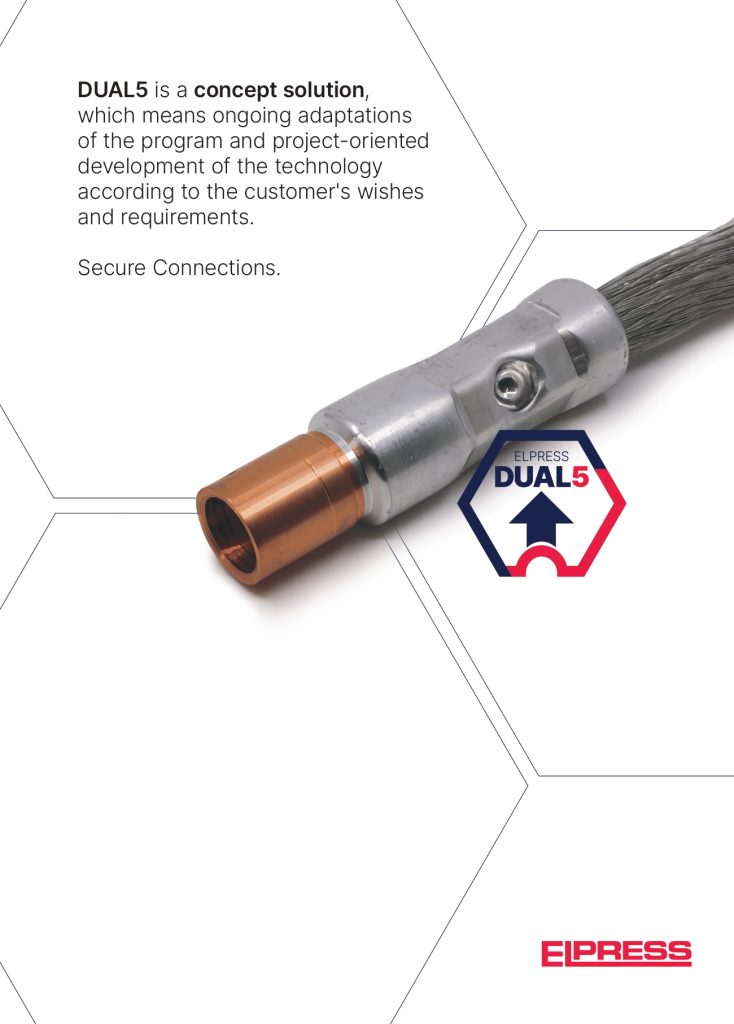
DUAL5 was developed and originally patented by Elpress. It addresses the challenges of crimping flexible aluminium conductors in the automotive industry. Rather than relying on a single crimping action, DUAL5 is a controlled crimping sequence that delivers both mechanical integrity and electrical reliability in a repeatable way. The process involves a two-stage crimping action, but the underlying engineering design uses three coordinated functional elements.
- The die pairs are adapted to the external diameter of the sleeve, which means that the same die pair can be used for several nominal sizes
- For optimal mechanical durability, a hexagonal crimp is made, which compresses the conductors’ wires in a gentle way without damaging them
- An indented crimp then stretches the wires and breaks the oxide layer, which provides optimal and stable conductivity
Together, these functions create a controlled balance between mechanical protection and electrical performance. The result is a single, repeatable crimping concept designed for production environments where consistency, reliability and scalability are critical.
Flexible Aluminium:
|
|
|
|

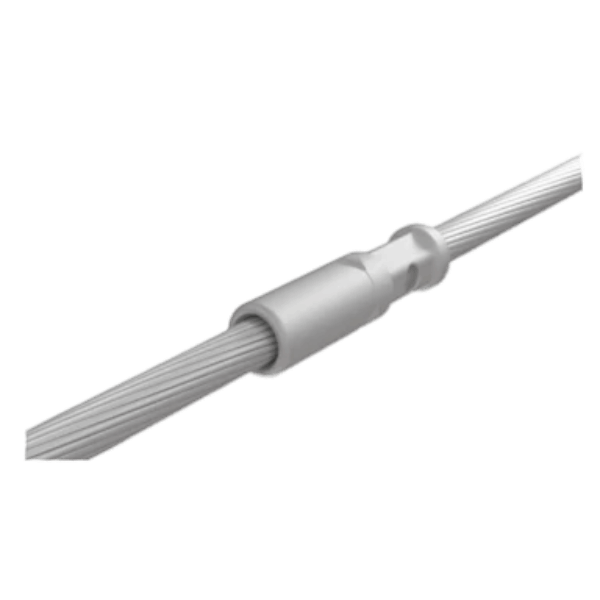
Combine With:
|
|
|
|
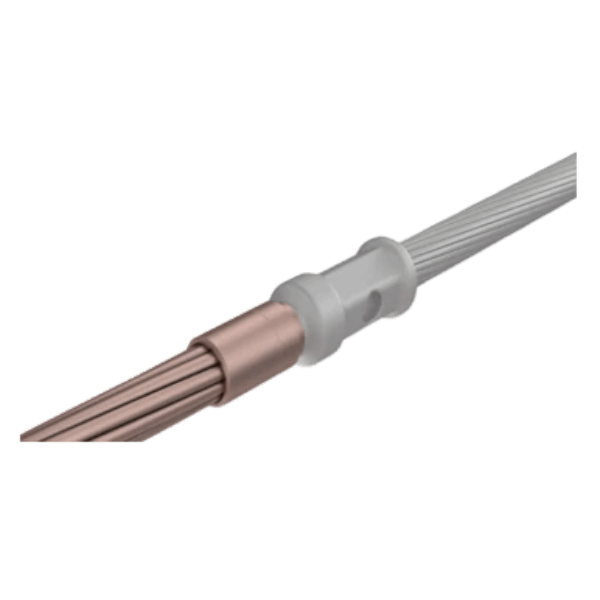
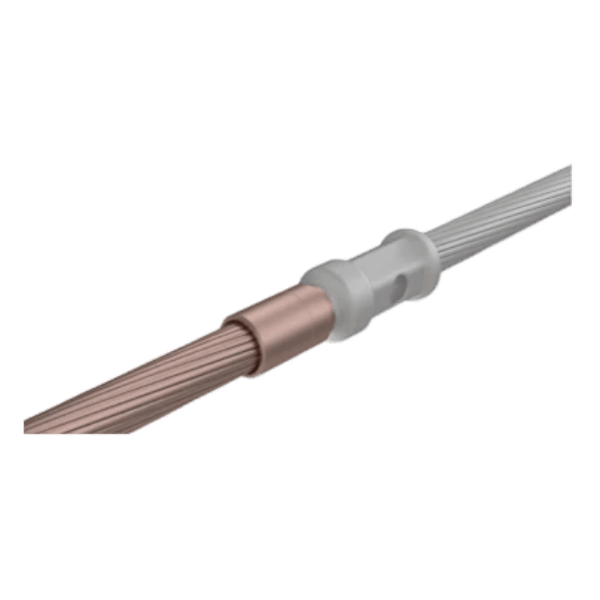
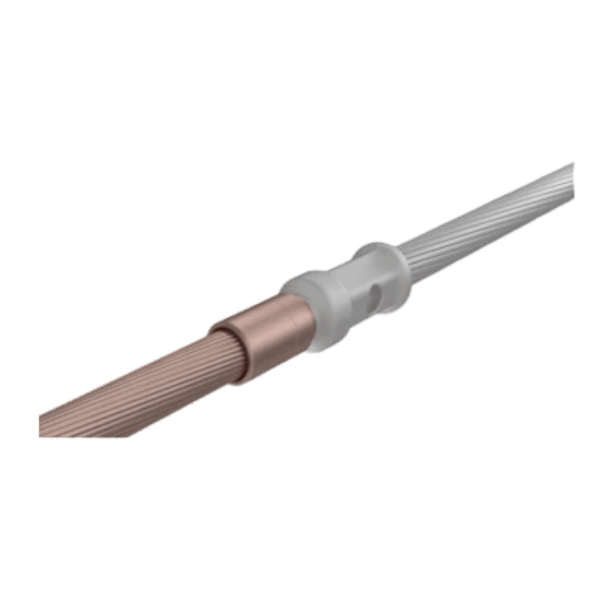
Terminals
| Article | mm² (Class 2) | mm² (Class 5) | Die Number | Tool |
| AS70* | 70 | 50 | 20 | DV250 |
| AS95* | 95 | 70 | 25 | DV250 |
| AS120* | 120 | 95 | 25 | DV250 |
| AS150* | 150 | 120 | 25 | DV250 |
| AS185* | 185 | 150 | 32 | DV350 |
| AS240* | 240 | 185 | 32 | DV350 |
| AS300* | 300 | 240 | 37 | DV350 |
| AS400* | 400 | 300 | 40 | DV350 |
| AS500B* | 500 | 400 | 52 | DV350 |
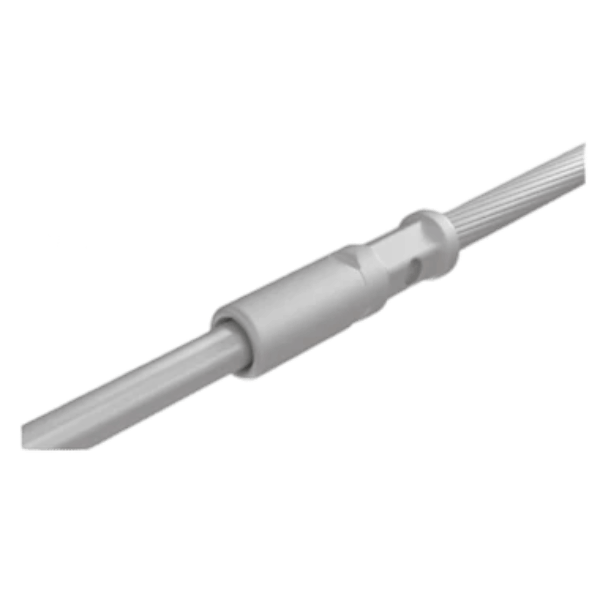
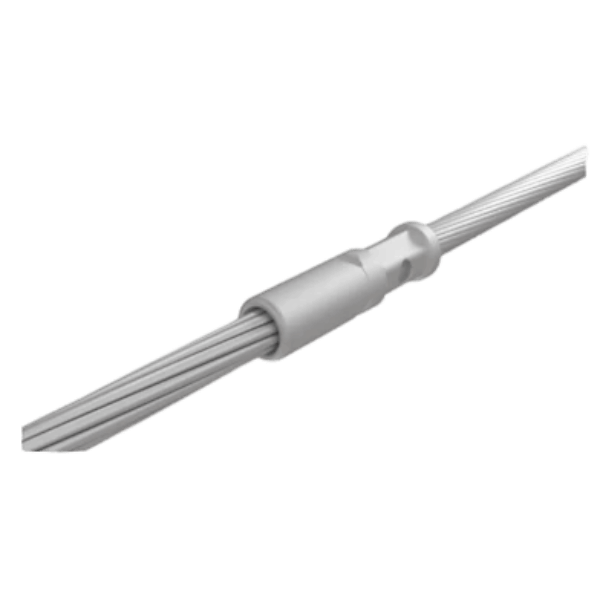
9 sizes can be crimped with 6 die pairs in 2 tools with 1 crimping
*AS is a product example. The same applies to the sizes in the AK/AKS/AKK product programs.
Automotive Applications: Where Flexible Aluminium is Being Used
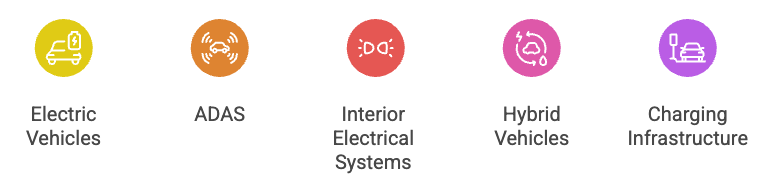
The adoption of flexible aluminium conductors is accelerating across modern vehicle platforms as manufacturers continue to prioritise weight reduction, efficiency and system complexity management. In electric vehicles (EVs), manufacturers widely use aluminium in battery systems and power distribution networks, where reducing overall mass directly improves driving range and energy efficiency. This makes it a key material in next-generation EV architectures.
In Advanced Driver Assistance Systems (ADAS), sensors, radar units, cameras and control modules all depend on stable, low-resistance electrical connections to ensure accurate data transmission and system reliability under real-world driving conditions. Within interior electrical systems, including infotainment, lighting and climate control, aluminium wiring helps reduce overall wiring harness weight while also improving design flexibility for increasingly compact and feature-rich vehicle interiors.
Hybrid vehicles also benefit from aluminium integration, as dual powertrain architectures require complex wiring systems where weight reduction plays an important role in improving overall vehicle efficiency. Finally, in charging infrastructure, manufacturers increasingly use aluminium in charging systems and connectors to support cost-effective, high-capacity power transfer across expanding EV networks.
Across all of these automotive applications, engineers rely on termination reliability as the defining factor in overall system performance, particularly when they use aluminium in place of traditional copper conductors.


Why DUAL5 Matters: Reliability, Simplicity & Future-Ready Performance
As aluminium continues to expand its role in automotive design, the focus is shifting from material selection to connection integrity. While alternative solutions such as welding-based technologies exist, they often introduce additional complexity, specialised equipment requirements and increased production constraints. Elpress DUAL5 takes a different approach. By focusing on controlled, repeatable crimping performance, it enables:
- Consistent termination quality across production environments
- Improved repeatability in high-volume manufacturing
- Reduced process complexity compared to welding-based alternatives
- Enhanced long-term reliability in demanding automotive conditions
- Easier integration into existing electrical assembly workflows
This makes it particularly relevant for modern automotive electrical systems, where manufacturers must achieve efficiency, scalability and reliability simultaneously.
Frequently Asked Questions
What is aluminium crimping in automotive electrical systems?
Aluminium crimping is the process of forming a secure electrical and mechanical connection between aluminium conductors and terminals.
Why is aluminium wiring popular in automotive applications?
Aluminium wiring reduces weight, lowers cost and improves energy efficiency in electric and hybrid vehicles, making it a popular choice in automotive applications.
What challenges do flexible aluminium conductors pose?
Flexible aluminium conductors are sensitive to mechanical damage, oxide layer formation and environmental stress such as vibration and thermal cycling.
Is aluminium crimping more complex than copper crimping?
Yes. Aluminium crimping is more complex because it needs enough force to break the insulating oxide layer, while still being gentle enough to avoid damaging the soft conductor strands.
Does Elpress DUAL5 improve aluminium crimping performance?
Yes. Elpress DUAL5 uses a dual-action crimping process that combines mechanical stability and oxide layer removal to ensure reliable, repeatable termination.
Where is aluminium wiring used in vehicles?
You can find aluminium wiring in EV battery systems, Advanced Driver Assistance Systems (ADAS), interior electronics, hybrid vehicles and charging infrastructure.
Elpress DUAL5 Conclusion
Aluminium is rapidly becoming a key material in the evolution of automotive electrical design. Its weight and cost advantages make it highly attractive for next-generation vehicles — particularly in the electric and hybrid space. However, its success depends entirely on one critical factor: the reliability of its electrical termination. By addressing the fundamental challenges of aluminium crimping in a controlled and repeatable way, Elpress DUAL5 provides a future-proof solution for manufacturers working with flexible aluminium conductors in demanding automotive applications. In an industry defined by efficiency, electrification and performance, the ability to connect aluminium reliably is no longer optional. It’s essential, and DUAL5 helps make that possible.
| 📞 +44 (0)1744 762 929 | 📧 sales@etechcomponents.com | Elpress: Learn More |