


Behind every well-organised installation is a cable containment system doing its job. From commercial buildings and data centres to busy industrial sites, the right setup keeps cables supported, organised and accessible. But with so many electrical cable containment types to choose from, where do you possibly start? Cable trays or ladders? Steel or GRP/FRP? And what about cable loads, corrosion and future maintenance? Fear not, because this guide breaks down the options, covers the key installation and compliance requirements, and introduces the Wibe Group cable containment ranges available from E-Tech.
What Is Electrical Cable Containment?
Simply put, cable containment is all about keeping electrical and data cables where they need to be. It gives them a clear route, proper support and, depending on the system, protection from damage and harsh conditions. There’s also more than one way to do it. Cable trays, ladders, troughing, trunking, conduit and ducting all have their place, but the trick is knowing which one suits your project. Ultimately, cable requirements, the installation environment and the project specification all help determine the right choice.
Cable Containment Types

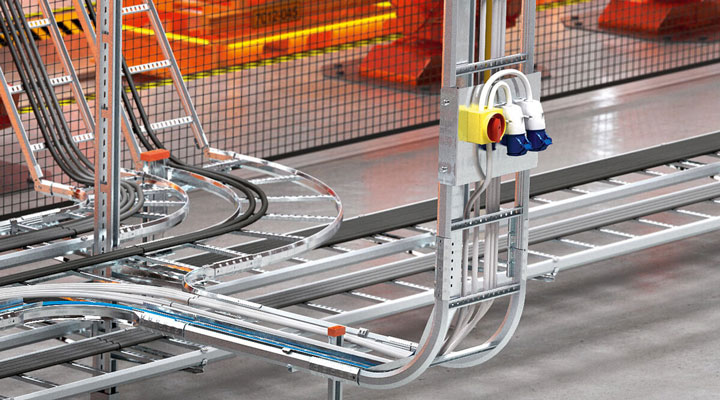
Electrical cable containment comes in several forms, each suited to different installations. Firstly, Cable Trays provide a continuous base for supporting cables. You can choose between solid-bottom and perforated designs that offer different levels of coverage and ventilation. On the other hand, Cable Ladders use two side rails joined by rungs, not only leaving cables accessible but allowing air to circulate too. For a more enclosed route, Cable Troughing is used in infrastructure and industrial applications where cables need additional protection.
Cable Trunking serves a similar purpose and is commonly found in building service installations. Then there’s Conduit and Cable Ducting, each providing enclosed pathways, with the right option depending on the installation method and level of protection required. Lastly, there’s Fibre-Optic Duct Systems that are designed for sensitive fibre-optic cables. They’re particularly useful in data centres, where dedicated routes protect cabling while keeping installations organised.
A word of warning, though. These cable containment systems are not interchangeable in every application. Cable requirements, mechanical protection, accessibility and environmental conditions are all factors that should guide your selection.
Materials Used in Electrical Cable Containment
The material you choose makes a difference to strength, weight and corrosion resistance. It also affects how well the system copes with its surroundings. Steel is a popular choice for cable trays and ladders in commercial and industrial settings. The protective finish needs to suit the environment, particularly where moisture or corrosive conditions are a concern. Stainless Steel is worth considering in more demanding environments, but the right grade depends on the chemicals, cleaning agents and conditions involved.
Glass Reinforced Polymer (GRP), also known as Fibre Reinforced Polymer (FRP), offers a non-metallic alternative. Made from glass fibres held in a resin matrix, GRP/FRP systems can provide good corrosion resistance at a lower weight than comparable steel components, depending on the design. Whatever material you choose, you should always check the manufacturer’s technical data. Factors such as coatings, resin type, temperature limits, UV exposure, chemical compatibility and fire performance all help determine whether a system is suitable for your project.
Where Is Cable Containment Used?
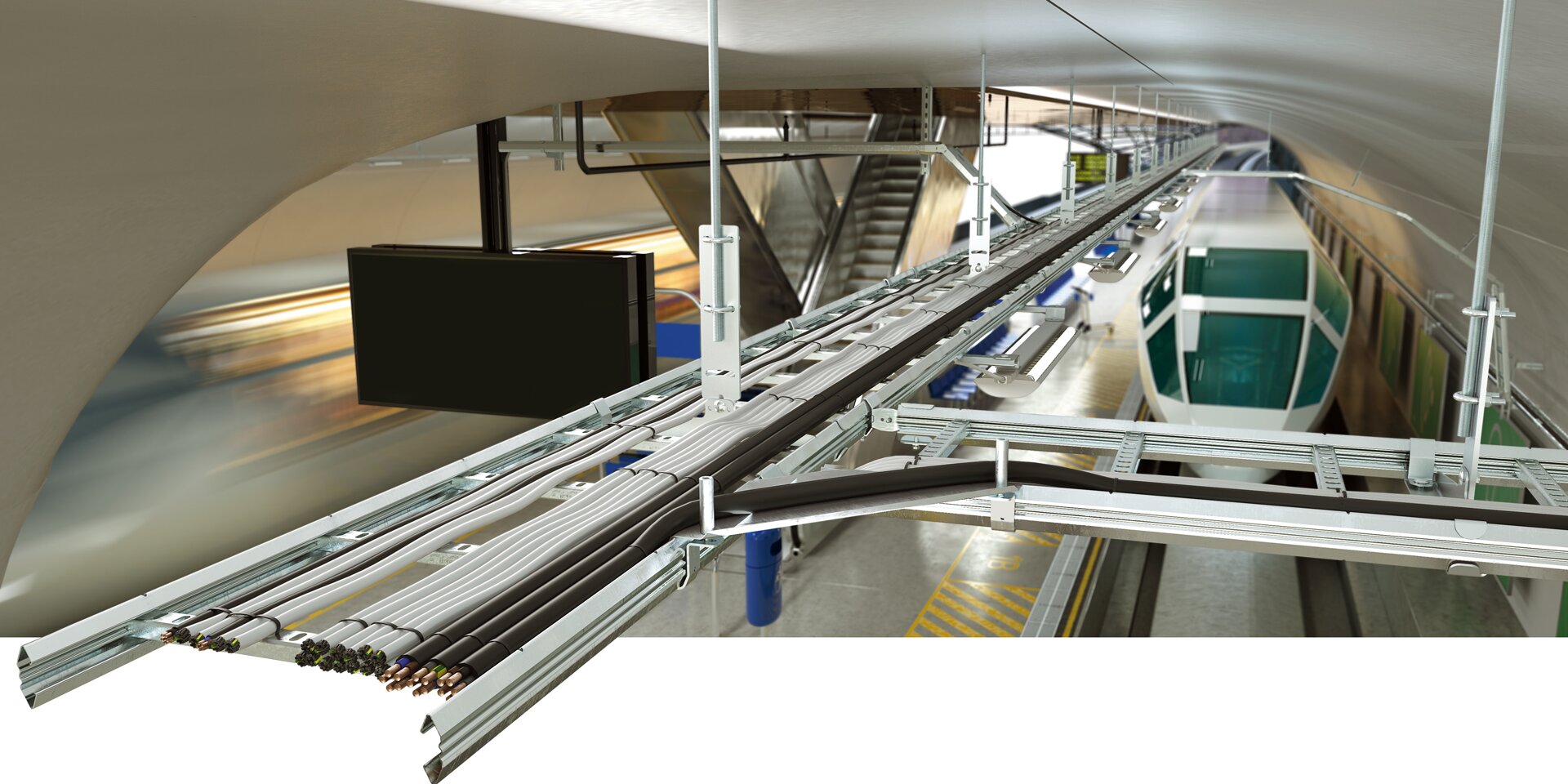
Of course, each environment brings its own challenges. You may have one system that works perfectly inside an office. But it might not be suitable for a coastal site exposed to salt, moisture and changing temperatures. To choose the right cable containment, you ultimately need to look at where it will be installed and what it needs to withstand.
Why Use Cable Containment Systems?
Cable containment isn’t just about keeping cables tidy. It gives cables a clear route, proper support and makes inspections and maintenance easier. It can also save time when the installation needs changing or expanding. But not every system suits every job. Cable trays and ladders won’t protect against every knock, spill or environmental hazard.
Depending on the site, you may still need covers, enclosed troughing or extra protection. It pays to think ahead, too. Before choosing a cable containment system, you should consider cable loading, maintenance access and flexibility for future changes. Just remember to keep any spare capacity within the manufacturer’s load limits and installation requirements.
Cable Trays vs Cable Ladders: What’s the Difference?
Cable Trays
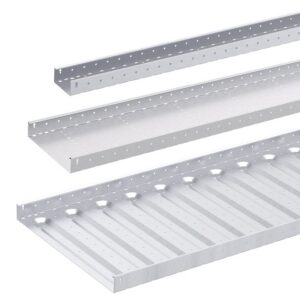
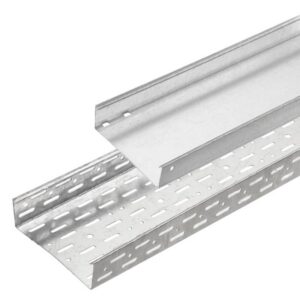
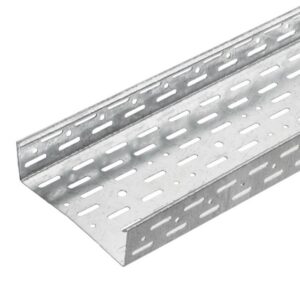
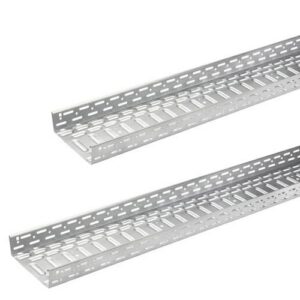
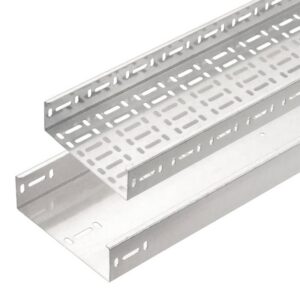
Trays give cables a continuous surface to rest on, keeping them supported along the route. Some have a solid base, while others are perforated or use a shaped profile to suit different installations. They’re used for power, control, instrumentation and data cables where a continuous supporting surface is needed. The best option depends on the cables, the installation conditions and the job at hand. Luckily for you, Wibe Group’s Stago range has several steel cable tray systems to suit different applications:


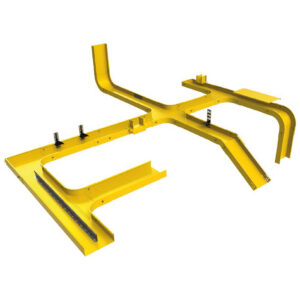
| SYSTEM | CONSTRUCTION | APPLICATIONS |
| KG281 | Galvanised Sheet Steel | Commercial buildings, visible installations, light-duty applications |
| KB184 | Pre-Galvanised or Zinc+ Sheet Steel | Commercial buildings, light to medium-duty industrial |
| TV184 | Hot-Dip Galvanised | Corrosive industrial environments |
| KB284 | Pre-Galvanised or Zinc+ Sheet Steel | Commercial buildings, light to medium-duty applications |
| ES114 | Stainless Steel | Industrial where stainless steel is specified |
| Fibre-Optic Duct | Robust Steel | Sensitive fibre-optic cabling in data centres |
Cable Ladders
As for ladders, they work a little differently. Two side rails are joined by rungs, supporting cables at regular intervals rather than across a solid base. The open design allows air to circulate and makes cables easier to access. They’re often used for power cabling and industrial installations, particularly where cable loads and support spans need careful consideration. The right ladder depends on the cable manufacturer’s requirements, rung spacing, loading and the distance between supports. Speaking of ladders, here are the Wibe Group steel options we offer at E-Tech:
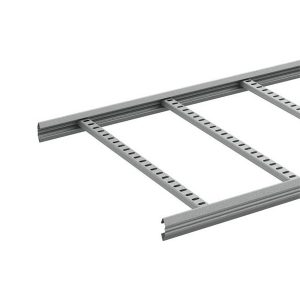


| LADDER | CONSTRUCTION & MATERIALS | CORROSION CLASS | APPLICATIONS |
| KHZSP | Pre-Galvanised or Zinc+ Sheet Steel, Hot-Dip Galvanised, Stainless Steel (AISI 316L) | C2 (Low), C4 (High), CX (Extremely High) | Commercial buildings, data centres, industrial |
| KHZ | Pre-Galvanised Sheet Steel, Hot-Dip Galvanised, Zinkpox® Coated Finish, Stainless Steel (AISI 316L) | C4 (High), C5 (Very High), CX (Extremely High) | Commercial buildings, industrial, energy, food processing |
| KHZP | Pre-Galvanised Sheet Steel (KHZPS), Hot-Dip Galvanised, Zinkpox® Coated Finish, Stainless Steel (AISI 316L) | C2 (Low), C4 (High), C5 (Very High), CX (Extremely High) | Commercial buildings, data centres, industrial, energy, food processing |
| KHZV | Hot-Dip Galvanised, Zinkpox® Coated Finish, Robust Steel | C4 (High), C5 (Very High) | Industrial, long span installations |
| KHZPV | Hot-Dip Galvanised, Zinkpox® Coated Finish, Stainless Steel (AISI 316L), Robust Steel | C4 (High), C5 (Very High), CX (Extremely High) | Industrial, long span installations |
| KHZP 20C | Hot-Dip Galvanised, Stainless Steel (AISI 316L), Robust High-Sided Steel | C4 (High) | Industrial, long span installations |
Cable Ladder Systems
When it comes to electrical containment, the environment matters just as much as the cable load. That’s why Wibe Group offers complete cable ladder systems for different corrosion environments, with options ranging from C2 and C3–C4 to C5 and CX. Not sure which corrosion class you need? Simply check the manufacturer’s guidance and the conditions on-site to find the right system for your project.
C2 Corrosion Class Cable Ladder System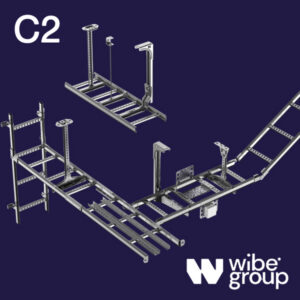 |
C3-C4 Corrosion Class Cable Ladder System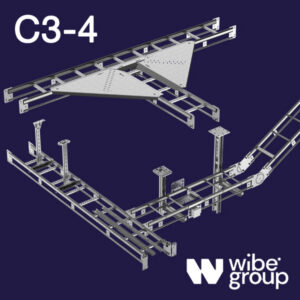 |
C5 Corrosion Class Cable Ladder System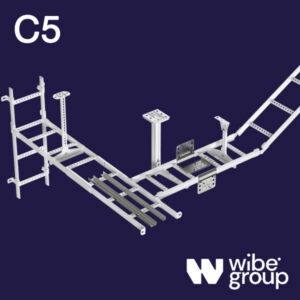 |
CX Corrosion Class Cable Ladder System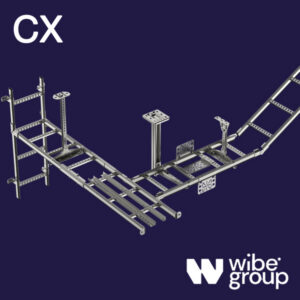 |
| SYSTEM | COMPATIBLE LADDERS | CORROSION CLASS | APPLICATIONS |
| C2 | KHZSP, KHZPS | C2 (Low) | Commercial buildings, warehouses, sports halls |
| C3–C4 | KHZ, KHZPZ, KHZP | C3 (Average), C4 (High) | Commercial / industrial environments |
| C5 | KHZ, KHZP | C5 (Very High) | Industrial environments |
| CX | KHZSP, KHZP | CX (Extremely High) | Highly corrosive industrial environments |
How Do You Choose Between Cable Trays and Cable Ladders?
Neither system is automatically stronger or better suited to every job. It all comes down to the specific product and installation, so check the technical data for the tray or ladder, along with its brackets, supports and fixings. For all the available options, explore E-Tech Components’ Cable Tray Systems and Cable Ladder Systems categories.
| CONSIDERATION | WHAT TO CHECK |
| Cable Type | Cable support, bending and installation requirements |
| Loading | Total cable weight and the system’s rated safe working load |
| Support Spans | Permitted spans and deflection limits |
| Environment | Corrosion, moisture, chemicals, UV and temperature |
| Accessibility | Whether a continuous base, open access or covers are required |
| Future Changes | Available space, maintenance access and compatible accessories |
| Project Specification | Fire performance, segregation, earthing and other applicable requirements |
GRP/FRP Cable Containment Systems: Benefits and Applications
Metallic cable containment is a solid choice for many projects out there. But what happens when corrosion becomes a bigger concern, or a non-metallic system makes more sense?
When Should You Consider GRP/FRP?
GRP/FRP Cable Containment is worth considering when weight and corrosion resistance matter. Its non-metallic construction can make it a practical option for industrial sites, marine environments, offshore projects and major infrastructure. But be warned. GRP/FRP isn’t a one-size-fits-all solution. Before choosing a system, you should check the product’s resin type, temperature limits, UV exposure and chemical compatibility. Fire performance and structural loading matter too. The right choice depends on the conditions the system will face and the demands of your installation.
Mita Flex and MultiFlex Support System
Wibe Group’s cable containment offering also includes the Mita Flex and MultiFlex Support System. This combines GRP/FRP cable trays and ladders with a modular framework of channels, sleeves, brackets and cantilever arms. Together, they provide adaptable, heavy-duty cable support in harsh and corrosive environments.
Mita Flex and MultiFlex Support System |
| SYSTEM | COMPATIBLE LADDERS | COMPATIBLE TRAYS | APPLICATIONS |
| Mita Flex and MultiFlex Support System | LM100, LMP150, LH150 | CT50, CT80 | Wind, oil & gas, marine, fish farming, heavy industry |
Mita Flex GRP/FRP Cable Trays and Ladders
Wibe Group’s Mita Flex range of cable containment includes GRP/FRP trays, ladders, support structures and accessories. Suiting industrial, infrastructure and construction projects, the range includes:
 |
 |
 |
 |
 |
 |
 |
| SYSTEM | CONSTRUCTION | HEIGHT | APPLICATIONS |
| LM100 | FRP/GRP | 100 mm | Medium duty applications |
| LMP150 | FRP/GRP | 150 mm | Multi-purpose applications |
| LH150 | FRP/GRP | 150 mm | Heavy-duty applications |
| CT50 | FRP/GRP | 50 mm | Industrial, infrastructure, construction |
| CT80 | FRP/GRP | 80 mm | Industrial, infrastructure, construction |
The CT50 and CT80 cable containment systems come in widths from 50 mm to 400 mm. Their return-flange design adds rigidity, while different resin options help match the system to the job. Need support for a larger installation? As we previously mentioned, the Mita Flex and MultiFlex Support System provides a framework for mounting cable ladders and trays. You can complete the setup with compatible accessories and bolts and bolt sets. Want to learn more about the GRP/FRP material itself? Take a look at E-Tech Components’ existing guide. And before choosing a system, always check the product-specific technical documentation to make sure it’s suitable for your installation.
GRP GMAX® Cable Troughing for Rail and Infrastructure
 |
| SYSTEM | CONSTRUCTION | APPLICATIONS |
| GRP GMAX® Cable Troughing System | GRP | Railways, infrastructure, heavy-duty industrial |

Before specifying GMAX®, check the current certificate and its scope, along with Wibe Group’s installation guidance. You’ll also need to confirm load capacity, support arrangements and suitability for the site. That way, you can be confident the system meets the demands of your project.
Cable Containment Installation: Key Considerations
Getting electrical containment right isn’t just about choosing the right tray or ladder. How it’s supported, loaded and installed matters just as much. A system’s rated capacity only applies to the specified setup, so changing the support spans, brackets or fixings can affect what it can safely carry. Here are four things to check before getting started.
1. Support Spacing and Load Capacity

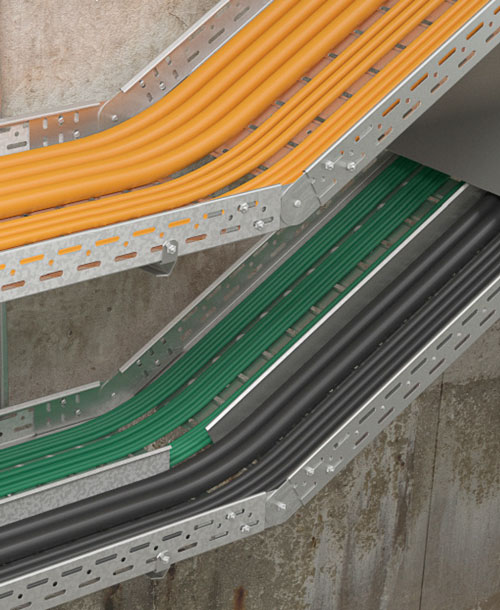
First, check the manufacturer’s safe working load and permitted support spans for your chosen system. These can vary with the ladder or tray dimensions, the distance between supports and how the cables are loaded. Don’t assume the same figures apply to a different product or setup. The brackets, anchors, fixings and supporting structure must also be suitable for the expected load.
2. Cable Routing and Accessories
It pays to plan the route before installation begins. Bends, tees, risers and transitions must suit the cables’ bend radii and installation requirements. Choose compatible couplers, supports and accessories, and consider whether you need covers, dividers or extra mechanical protection. Where different types of cable share a route, make sure segregation follows the design and applicable requirements.
3. Environment and Expansion
Think about the conditions the system will face. Materials, finishes and fixings need to suit the environment, particularly outdoors or where corrosion is a concern. Temperature changes can also cause materials to expand and contract. Follow the manufacturer’s guidance on thermal movement and any expansion provisions needed for your system. Remember, there’s no single expansion joint spacing that works for every installation.
4. Cutting, Fixing and Inspection
Always follow the manufacturer’s instructions when cutting, drilling and fastening components. Take care of sharp metal edges and repair any damaged coatings according to the manufacturer’s recommendations. Working with GRP/FRP? Use suitable PPE and follow the guidance for handling the material and finishing cut edges.
Before installing the cables, check that everything is properly aligned and secured. Inspect the joints, supports and fixings, and confirm that any required bonding and fire-stopping arrangements are in place. A few checks at this stage can help prevent problems later on.
UK Regulations and Standards for Cable Containment
Choosing the right electrical cable containment is only half the job. You also need to know which UK regulations and standards apply to your installation. These depend on the building, the cables, the system and the project requirements. Here are the main ones to consider.
BS 7671: IET Wiring Regulations
The BS 7671 IET Wiring Regulations set out requirements for electrical installations in the UK. Depending on the project, these can cover cable support, protection against damage, segregation and earthing or bonding. Always check the current edition and any applicable amendments before specifying a system.
BS EN 61537: Cable Tray and Cable Ladder Systems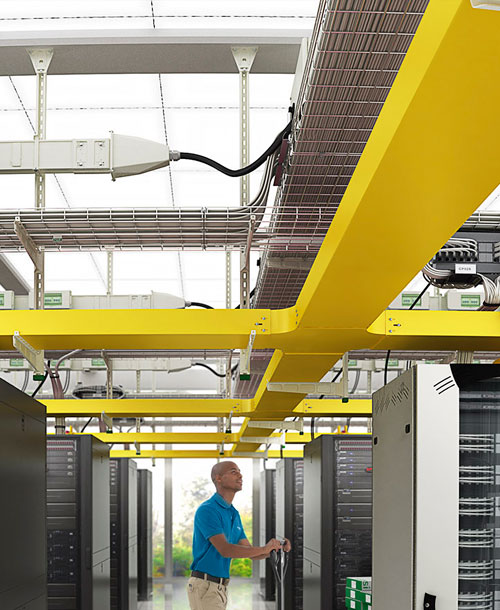

Working with cable trays or ladders? BS EN 61537 covers the requirements and testing for these cable containment systems. It doesn’t cover every type of electrical containment, though. Conduit, cable trunking and cable ducting have their own applicable requirements, so check the relevant standards and product documentation.
Electricity at Work Regulations 1989
The Electricity at Work Regulations 1989 set out legal duties for electrical safety in the workplace. Electrical cable containment is part of the bigger picture, helping support a safe installation throughout its design, installation, operation and maintenance.
Building Regulations and Fire Safety
Fire safety can also influence how cables are routed and supported, particularly where routes pass through walls or floors, or serve safety-critical systems. In England, Approved Document B: Fire Safety provides guidance on meeting the fire safety requirements of the Building Regulations. If you’re based elsewhere in the UK, different guidance applies.
Additional requirements may apply to systems such as fire detection, emergency lighting and other life-safety services. So, you should always check what your specific project calls for rather than assuming the same rules apply to every installation.
The bottom line: Check the relevant regulations and standards before choosing your cable containment. Make sure the system, supports and accessories meet the design requirements, and use the manufacturer’s technical documentation to help confirm suitability. Product information is important, but it doesn’t replace a competent design.
Wibe Group Cable Containment from E-Tech Components
E-Tech Components is a Wibe Group Distributor and Stockist, supplying cable containment solutions for commercial, industrial and infrastructure projects. Our range covers everything from Stago steel cable trays and steel cable ladders to Mita Flex GRP/FRP trays and ladders, plus the GRP GMAX® cable troughing system.
Brochures, datasheets and other documents are available below and on the relevant E-Tech product pages, where they are clearly marked. Consult the current documentation for detailed dimensions, load ratings, classifications and installation requirements.
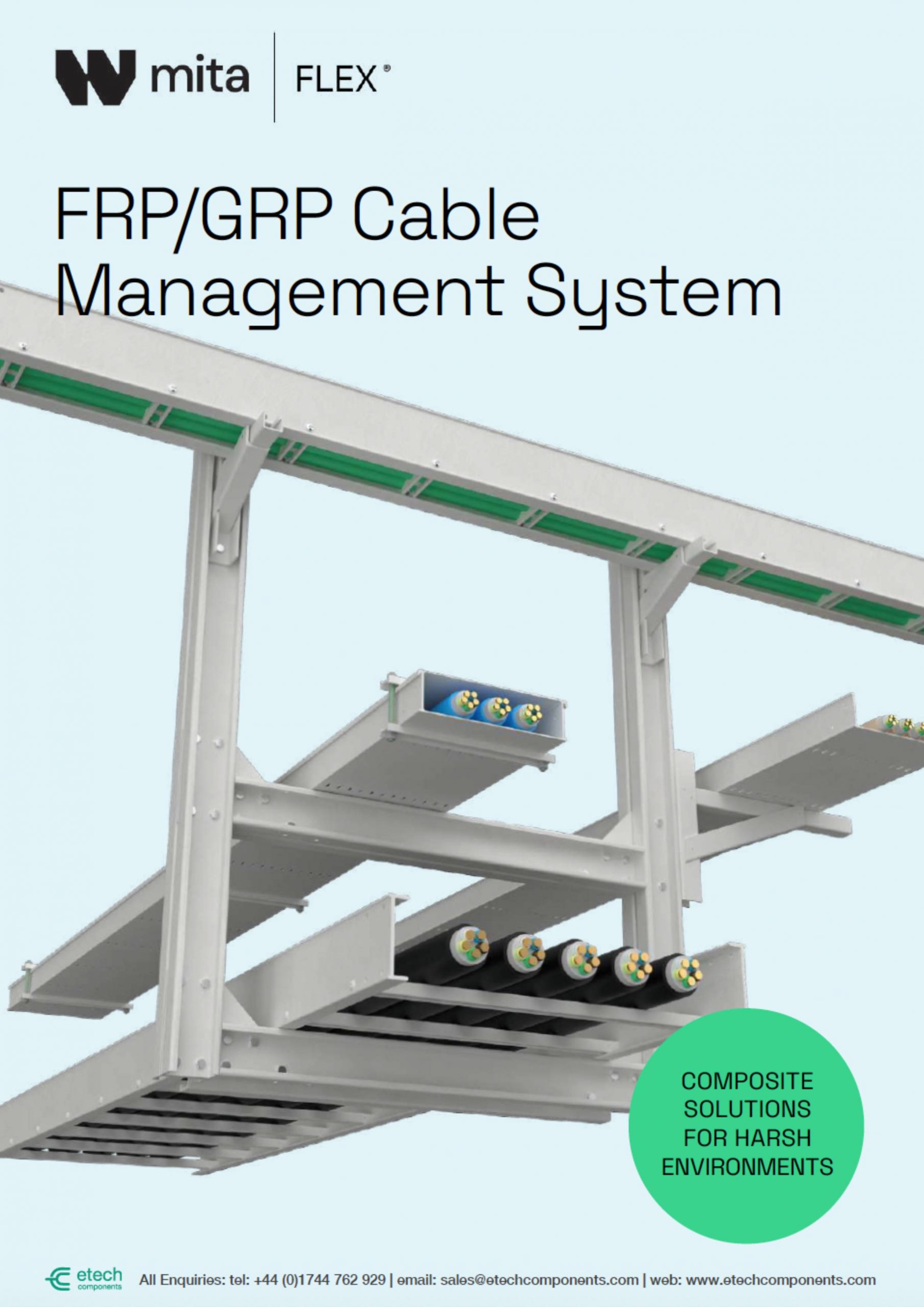
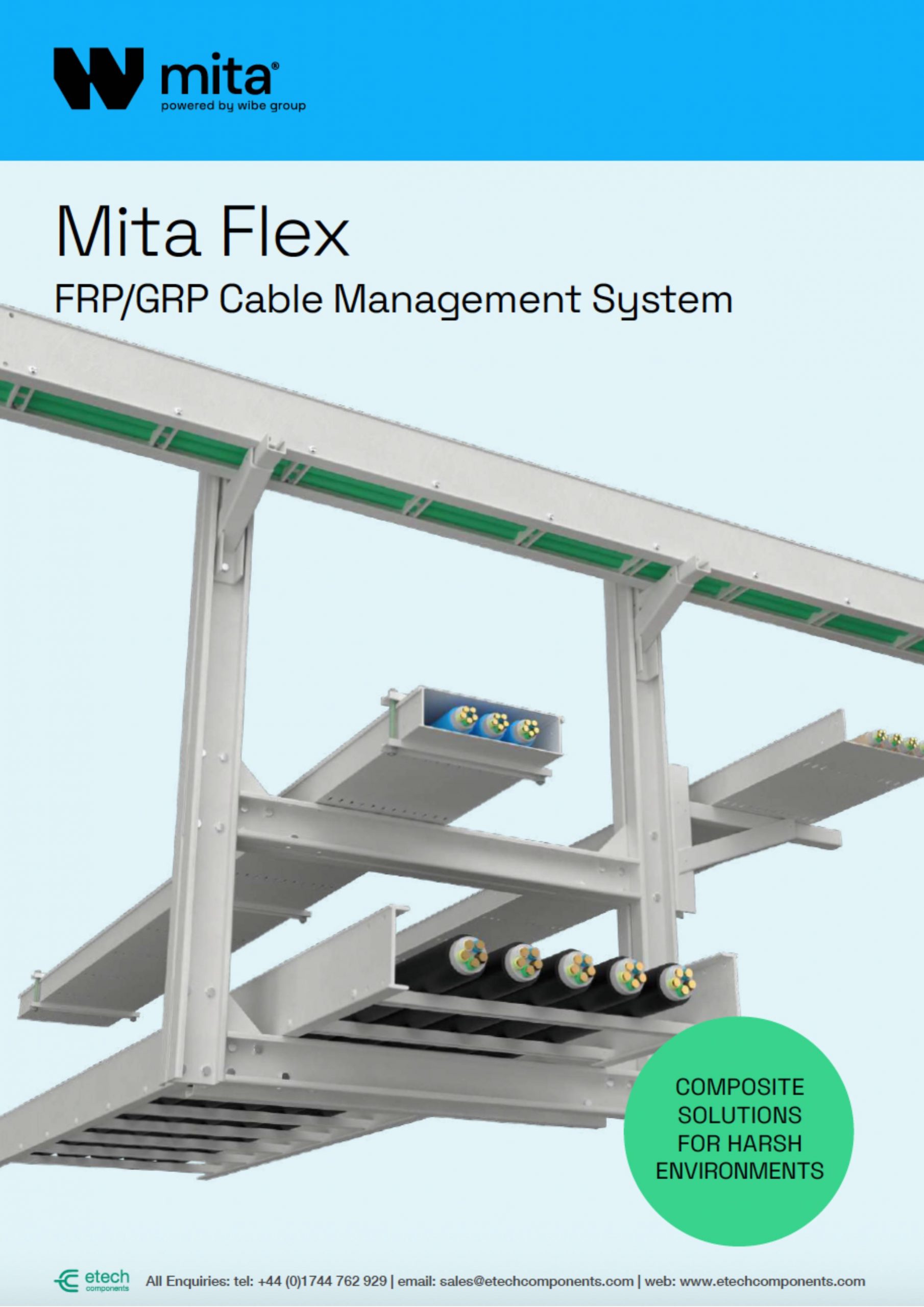
Wibe Group Cable Containment – PDF Brochures
|
|
|
|
|


Frequently Asked Questions
What is the difference between cable trays and cable ladders?
Cable trays have a continuous base to support cables, while cable ladders use side rails and rungs. The right choice depends on the cable requirements, loading, support spans, access and installation environment.
How do I choose the right cable containment system?
Start with the cable types, total load, route layout and environmental conditions. Check the manufacturer’s load ratings, permitted support spans, compatible accessories and any project-specific requirements.
Is GRP/FRP cable containment better than steel?
Neither material is best for every application. GRP/FRP can be useful where corrosion resistance, lower weight or non-metallic construction is important. Steel may be suitable for a wide range of other installations. Compare the actual products’ technical data before deciding.
Can you use electrical cable containment systems outdoors?
Yes, provided the selected system is suitable for the expected exposure. Consider corrosion, moisture, UV, temperature changes, wind or ice loads, and the compatibility of fixings and accessories.
Does metallic cable containment need earthing or bonding?
That depends on the electrical design and applicable requirements. Do not assume that a tray or ladder automatically provides a suitable protective conductor, or that every installation has identical bonding requirements. A competent electrical designer should determine the necessary measures.
Where can I find technical datasheets for Wibe Group’s cable containment?
Brochures, technical datasheets and other documents are available on the relevant Wibe Group product pages on the E-Tech website. Find answers to specific Wibe Group cable containment questions here.
Further Reading
- Wibe Group – Brand Page
- Glass Fibre Reinforced Polymer (GRP/FRP): The Smart Choice for Cable Management and Protection
- Weather the Storm: GRP/FRP Solutions for Coastal, Marine & Offshore Cable Protection
- E-Tech Components’ Paul Forester Completes Cykelvasan Öppet Spår with Wibe Group
Need Help Choosing the Right Electrical Containment System?
Every project has different requirements, so choosing the right system means looking at factors such as loading, corrosion resistance and installation conditions. To help you make an informed choice, our Wibe Group product pages include relevant brochures, datasheets and technical documents covering dimensions, load ratings, corrosion classifications and installation requirements.
Ready to explore your options? Browse the Wibe Group cable containment range at E-Tech or contact our team for advice.
| 📞 +44 (0)1744 762 929 | 📧 sales@etechcomponents.com | Wibe Group: Learn More |