

Weather the Storm: GRP/FRP Solutions for Coastal, Marine & Offshore Cable Protection
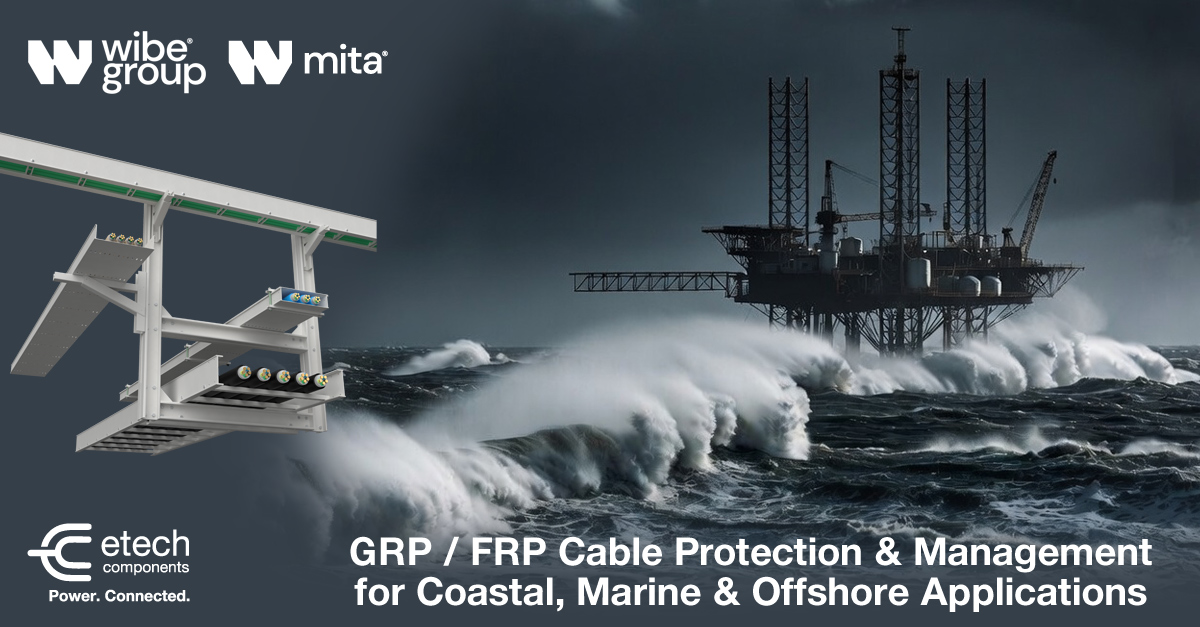
Harsh offshore, coastal and marine environments pose serious challenges for engineers and project managers. High winds, saltwater spray, extreme UV exposure and constant moisture can all wreak havoc on traditional steel or aluminium cable systems, causing corrosion, premature failure and costly maintenance. For offshore cable installations, choosing the right material is critical. Glass Fibre Reinforced Polymer (GRP/FRP) is a lightweight, corrosion-resistant, fit-and-forget solution. It can be deployed in the form of GRP Cable Ladders, Trays or Support Systems (Modular Structural Framework), providing reliable protection for coastal cables, offshore cables and wind turbine cables. In this article, we’ll explain what GRP/FRP is, why it’s ideal for harsh marine and coastal environments, and how Wibe Group’s Mita Flex and MultiFlex Support System ensure reliable cable protection across turbines, converter platforms and offshore rigs.
Why Are Offshore Cable Environments So Challenging?
Offshore and coastal projects face tough conditions that traditional metals just can’t handle. You’ve probably heard of saltwater corrosion before. Well, this is caused by chlorides in the seawater and it’s made worse by humidity and changing temperatures. The result isn’t pretty either! Steel and aluminium can degrade fast, not only putting cables at risk but creating serious safety issues too.
Elsewhere, prolonged UV exposure doesn’t help. It can eat away at coatings and metals, meaning more maintenance down the line. On top of that, high winds, waves and constant vibrations put serious strain on cable supports, so you need systems that are both strong and flexible. Getting out there to fix things isn’t easy too. Offshore repairs often mean calling in heavy-lift vessels or helicopters, which gets expensive and takes time. That’s why choosing a lightweight, durable and corrosion-resistant material is essential for reliable offshore cable protection.

What Is GRP/FRP and Why Does It Work for Offshore Cable?
 Sometimes called Fibre Reinforced Polymer (FRP) or Glass Reinforced Polymer (GRP), Glass Fibre Reinforced Polymer (GRP/FRP) is a composite material made of glass fibres embedded in a polymer resin. In simple terms, it combines the strength of glass with the durability of plastic. Clever, right? Well, this is where it really starts to stand out!
What makes GRP so effective is how it balances strength and weight. It’s strong enough to support heavy wind turbine cables and high-voltage lines, yet far lighter than steel, which makes handling and installation much easier. Unlike metal, it won’t rust or corrode when exposed to saltwater, chemicals or constant moisture, so it holds up far better in offshore conditions.
It’s also non-conductive, which is a big advantage for electrical installations, as it removes the need for earthing or bonding when used in GRP Cable Ladders, GRP Cable Trays or Support Systems. On top of that, GRP lasts for decades. Once you install it, you can pretty much forget about it. After all, GRP requires little to no maintenance, even in harsh coastal and marine environments. Put all that together, and it’s easy to see why GRP and FRP suit offshore projects so well, from wind turbine foundations to converter platforms and oil & gas rigs.

Key Applications of GRP in Offshore and Coastal Projects

Offshore Wind Turbines and Foundations
Based many, many miles out to sea, wind farms require robust Cable Management Systems for high-voltage wind turbine cables running from the nacelle to the base. Solutions like GRP Cable Trays, Ladders and Support Systems not only resist corrosion from saltwater spray. They reduce installation weight too. Modular by design, this allows engineers to configure systems on-site, accommodating structural complexity while minimising installation time.
Converter Platforms and Offshore Substations
Converter platforms handle large volumes of power transfer and require high-reliability Cable Support Systems. The corrosion resistance of GRP ensures that offshore cables remain safe and operational over decades, reducing downtime and maintenance costs. Non-conductive GRP also enhances safety for personnel working near high-voltage equipment.
Oil & Gas Rigs and Marine Infrastructure
GRP is widely used for Cable Trays, Ladders, Walkways and Handrails. This could be on offshore oil platforms, Floating Production Storage and Offloading (FPSO) facilities, or marine vessels. Ultimately, its lightweight, non-conductive and corrosion-resistant nature provides reliable cable routing and personnel safety in marine environments and saltwater-exposed structures.
Explore Wibe Group’s GRP Cable Ladders, Trays and More
The Wibe Group Mita Flex and MultiFlex Support System is a modular, durable solution specifically designed for harsh offshore and coastal conditions. These complementary systems allow:
- Flexible Configurations: 2D or 3D cable routing for complex offshore structures
- Ease of Installation: You can cut, drill and mount lightweight GRP components on-site without heavy machinery
- Long-Term Protection: Resistant to saltwater, UV and chemical exposure, ideal for coastal cables and offshore cable systems
From GRP Cable Ladders supporting heavy wind turbine cables to GRP Cable Trays on converter platforms, these solutions help reduce lifecycle costs while maximising reliability.
Mita Flex – Cable Containment System
 |
 |
 |
 |
 |
 |
 |
MultiFlex Support System – Modular Structural Framework
|
|
|
|
|
|
|
|
|
|
|
|
|
|
|
|


Why GRP Is the Smart Choice for Coastal, Marine & Offshore Cable Protection

Put simply, if you’re working in offshore, marine or coastal environments, GRP delivers where traditional materials fall short. To recap the major benefits, here’s what they look like in practice:
- Built to resist corrosion – GRP stands up to saltwater, chemicals and harsh marine conditions, helping protect your cables long-term
- Lightweight and easy to install – It’s much easier to handle than steel, making installation on structures like wind turbine foundations quicker and safer
- Safer for electrical environments – Being non-conductive, GRP reduces risk for anyone working around offshore cables
- Made to last with minimal upkeep – It’s a true fit-and-forget solution, designed to perform for decades without constant maintenance
- A more sustainable choice – With fewer replacements needed and lighter transport requirements, GRP helps reduce your overall environmental impact
Frequently Asked Questions
What’s the difference between internal and external corrosion? Can GRP handle both?
External corrosion happens when metals react with seawater, salt spray or humidity, while internal corrosion affects pipes or tanks carrying aggressive fluids. GRP naturally resists both because its polymer matrix keeps water, chemicals and air away from the glass fibres, eliminating the need for extra coatings.
What is the best solution for cable management and protection in underwater, coastal or subsea environments?
GRP is well suited to these environments because it resists corrosion, stays lightweight and offers long-term durability. That makes it ideal for subsea pipelines, risers and cable trays where access for maintenance is difficult and costs are high.
Is GRP suitable for offshore structures beyond cables?
Absolutely. GRP works great for walkways, handrails, ladders, gratings and trench covers. It’s strong but lightweight, non-conductive and corrosion-resistant, helping keep workers safe while reducing the need for frequent maintenance.
Is Glass Fibre Reinforced Polymer (GRP/FRP) fire-resistant?
Yes. GRP can be highly fire-resistant depending on the resin used. Standard polyester resins offer good fire performance, while specialised acrylic or vinyl ester resins offer low smoke, low toxicity and high-temperature resistance. That means GRP can meet strict fire and safety requirements in offshore, marine or enclosed applications.
How does GRP reduce maintenance and environmental impact offshore?
Because it doesn’t corrode, warp or degrade, GRP needs far fewer inspections, repairs or replacements. This lowers lifecycle costs and reduces transport and coating needs, making it more sustainable than steel.
Can GRP systems be customised and tested for complex offshore projects?
Yes. Modular systems like Wibe Group Mita Flex and MultiFlex allow 2D or 3D configurations for turbines, converter platforms or oil & gas installations. All quality GRP components are tested for load, slip resistance, fire performance and electrical safety, ensuring reliable operation in harsh conditions.
Conclusion
For engineers and contractors working in offshore, marine and coastal environments, GRP is no longer just an option. It’s the preferred choice for Cable Protection Systems. Whether you’re managing wind turbine cables, coastal cable networks or complex converter platform installations, GRP solutions such as Cable Ladders, Cable Trays and Support Systems provide the strength, durability and corrosion resistance required to weather the storm. Ultimately, investing in GRP ensures safer installations, reduced maintenance and long-lasting performance in some of the harshest environments on earth.
| ? +44 (0)1744 762 929 | ? sales@etechcomponents.com | Wibe Group: Learn More |